Crypto compliance is no longer optional—it is a foundational requirement for teams interacting with on-chain assets. With risks such as sanctioned addresses, scam flows, mixer exposure, and cross-chain fund movement, organizations must understand who they’re transacting with and how funds move to ensure safety and regulatory alignment.
Meanwhile, a new actor is emerging: AI agents. These agents analyze on-chain data, execute transactions, and make real-time decisions autonomously. Once an AI agent touches real funds, it requires the same (or higher) level of protection as humans—KYA (Know Your Address) and KYT (Know Your Transaction) built directly into its decision-making loop.
This raises a key question:
How do we provide compliance-grade risk intelligence to autonomous agents in a way they can actually consume?
The answer is X402.
Why X402 Matters for AI-Native Compliance
X402 is a lightweight, internet-native payment protocol that embeds micro-payments directly into HTTP requests. When combined with compliance APIs — such as address labeling or address screening — it turns them into agent-friendly, machine-payable intelligence services.
In this article, we demonstrate how to build an AI-ready, X402-enabled “Crypto KYA” API using https://x402.blocksec.ai as a real-world example. This architecture represents the future of agent-native crypto compliance.
The Modern Crypto Compliance Stack
Crypto compliance generally involves three layers. Using BlockSec’s MetaSleuth (labeling + light screening) and Phalcon Compliance (deep risk analysis), we outline the stack below.
1. Address Labeling (KYA) — MetaSleuth
The Address Label API returns essential attribution for blockchain addresses, including:
-
Entity name
-
Address category (exchange, mixer, scam, protocol, etc.)
-
Behavioral metadata
Supporting 25+ blockchains (Ethereum, Solana, Bitcoin, Tron, BNB, EVM networks), labeling forms the foundation of Know Your Address (KYA).
Learn more: MetaSleuth API Reference – https://docs.metasleuth.io/blocksec-aml-api/address-label-api/apis
2. Light Address Screening — MetaSleuth
Light screening provides a quick risk assessment with:
-
Numerical risk score
-
Risk indicators
-
Exposure factors (scam, mixer, sanctioned proximity, etc.)
This is useful for wallets, bridges, and basic compliance requirements.
3. Deep Multi-Hop Screening (KYT) — Phalcon Compliance
Light screening is limited—it only evaluates direct (1-hop) interactions. It cannot satisfy institutional KYT requirements because it:
-
Misses multi-hop fund exposures
-
Cannot follow FATF-aligned tracing logic
-
Fails on indirect flow analysis
-
Does not aggregate cross-chain movements
Phalcon Compliance fills the gap with:
-
Multi-hop fund tracing (KYT)
-
Cross-chain risk aggregation
-
Entity correlation
-
FATF-aligned risk scoring
Learn more: https://blocksec.com/phalcon/compliance
This deep layer is essential for exchanges, custodians, payment processors, and institutional compliance.
Why Traditional Compliance APIs Fail for AI Agents
Despite their value, nearly all compliance APIs today are built for humans and enterprise platforms — not autonomous agents. They usually require:
API keys, monthly subscriptions, dashboards and onboarding, fixed usage tiers, credit card billing, long-term account identity
AI agents, however:
-
May make 1 call today and 300 tomorrow
-
Operate intermittently
-
Spin up ephemeral instances
-
Perform checks only when needed
-
Have no notion of “account” or “billing cycle”
Traditional compliance APIs are fundamentally incompatible with AI agents.
How X402 Fixes This
X402 turns each HTTP request into a self-contained, cryptographically paid transaction.
When an agent calls:
GET /screen/deep/tron/{address}
…it attaches a signed X402 payment proof.
There is: no API key, no credits, no subscription, no dashboards.
Only on-demand payment, perfectly aligned with agent behavior. This is what makes X402 a native bridge between AI agents and crypto compliance.
X402 Overview:https://docs.cdp.coinbase.com/x402
Building an X402-Enabled KYA/KYT Endpoint
Below is a minimal example of turning a standard Python FastAPI endpoint into an X402-enabled, agent-payable compliance API — the same pattern used in x402.blocksec.ai.
1. Setup: Get the API Key
You need a Coinbase CDP API key + secret, used to verify payment proofs.
2. Initialize X402 Middleware
from fastapi import FastAPI
from x402.fastapi.middleware import require_payment
from cdp.x402 import create_facilitator_config

app = FastAPI()

facilitator_config = create_facilitator_config(
    api_key_id=CDP_API_KEY_ID,
    api_key_secret=CDP_API_KEY_SECRET,
)

app.middleware("http")(
    require_payment(
        path="/screen/deep/*",
        price="$1.00",
        pay_to_address=ADDRESS,
        network="base",
        facilitator_config=facilitator_config,
    )
)
Note: a wildcard path like /screen/deep/* cannot distinguish between /screen/deep/A and /screen/deep/B, which may cause security issues. Use the x-resource header for strict resource separation (not covered in this blog).
3. Return Results
async def phalcon_wallet_deep_screening(chain: str, address: str):
    chain_id = resolve_chain_id(chain)
    payload = {
        "chainId": chain_id,
        "address": address,
        "enableReScreening": False,
        "includeDetails": False
    }

    headers = {
        "API-Key": PHALCON_WS_API_KEY,
        "Content-Type": "application/json",
    }

async with httpx.AsyncClient(timeout=10) as client:
        resp = await client.post(PHALCON_WS_API_URL, json=payload, headers=headers)
        resp.raise_for_status()
        return resp.json()
4. Add Router
@app.get("/screen/deep/{chain}/{address}")
async def screen_wallet_deep(chain: str, address: str, request: Request):
    data = await phalcon_wallet_deep_screening(chain, address)
    return data
Using the Live Demo at x402.blocksec.ai
The implementation described above is live at: 👉 https://x402.blocksec.ai
This demo includes fully operational, machine-payable KYA/KYT endpoints backed by BlockSec intelligence.
Available Endpoints
-
Address Labeling —
/label/{chain}/{address} -
Light Screening —
/screen/light/{chain}/{address} -
Deep Screening —
/screen/deep/{chain}/{address}
Example Deep Screening
https://x402.blocksec.ai/screen/deep/tron/TYXqLb9ZyAeJeTFkt3Tx7kNyc3HufjvnMs
You will see a standard 402 Payment Required response—this is how X402 negotiation works for agents.
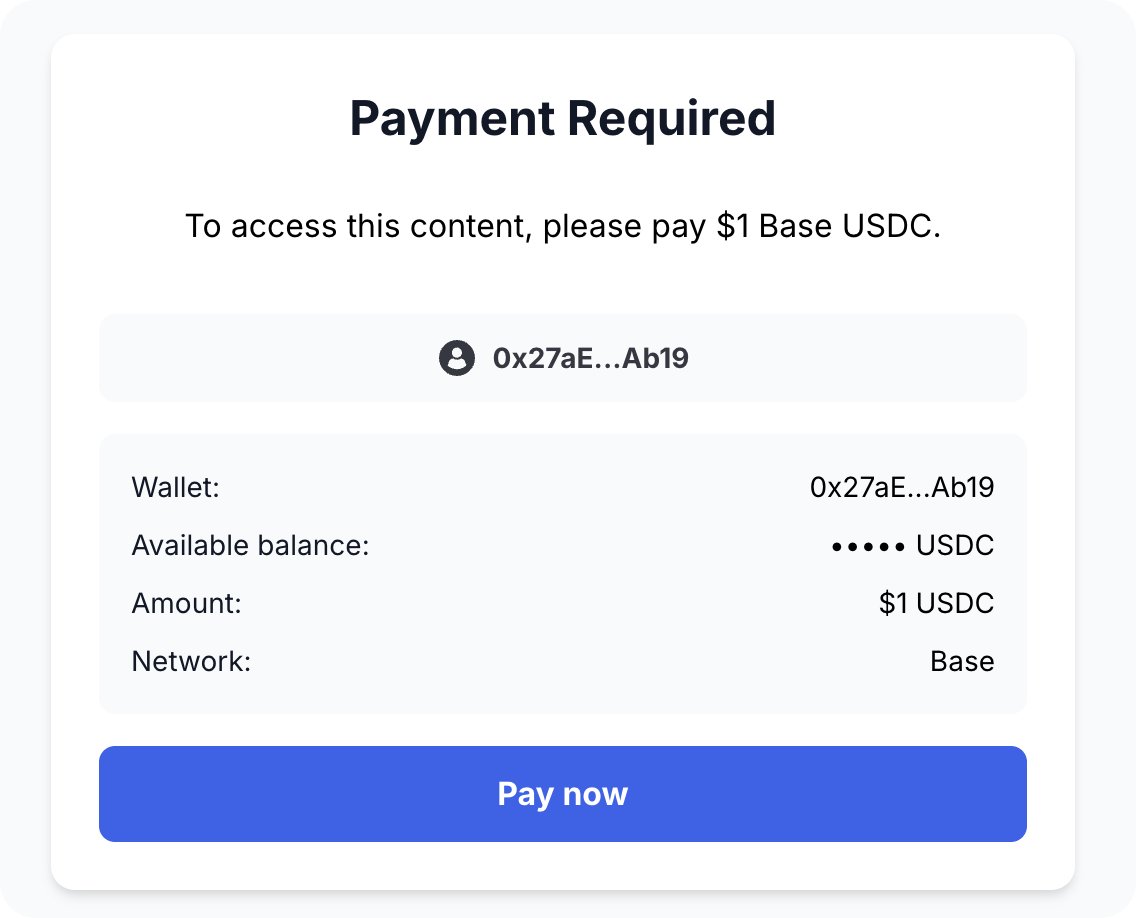
Using with an X402-Compatible Client
Traditional HTTP clients cannot complete the request. You must use:
-
an AI agent
-
a crypto wallet
-
the Coinbase CDP SDK
-
an X402-enabled runtime
Conclusion: The Future of Agent-Native Crypto Compliance
As crypto integrates more deeply with automation, compliance intelligence must evolve beyond dashboards and subscription-based platforms. AI agents will increasingly read on-chain data, route funds, manage portfolios, and interact with smart contracts. To do so safely, they must understand who they are interacting with and what risks they inherit—the foundations of KYA and KYT.
Traditional APIs are not designed for autonomous software. X402 changes the paradigm by making compliance:
-
machine-payable
-
permissionless
-
stateless
-
pay-per-request
The live demo at x402.blocksec.ai showcases this new model—compliance endpoints wrapped in X402, backed by BlockSec’s MetaSleuth and Phalcon Compliance intelligence, accessible without accounts or API keys.
As AI agents become first-class participants in financial ecosystems, they will require native access to real-time, compliance-grade intelligence. X402 provides the missing bridge: a simple, internet-native way for agents to acquire risk data precisely when they need it.
Crypto compliance, long built for humans, is becoming agent-native. This unlocks a new design space for safer, more autonomous on-chain systems.